
You want to spot roof trouble without climbing up there. This article shows easy ground-level signs to look for so you can decide if a quick repair, a full replacement, or a contractor visit makes sense for a Clarksville home.
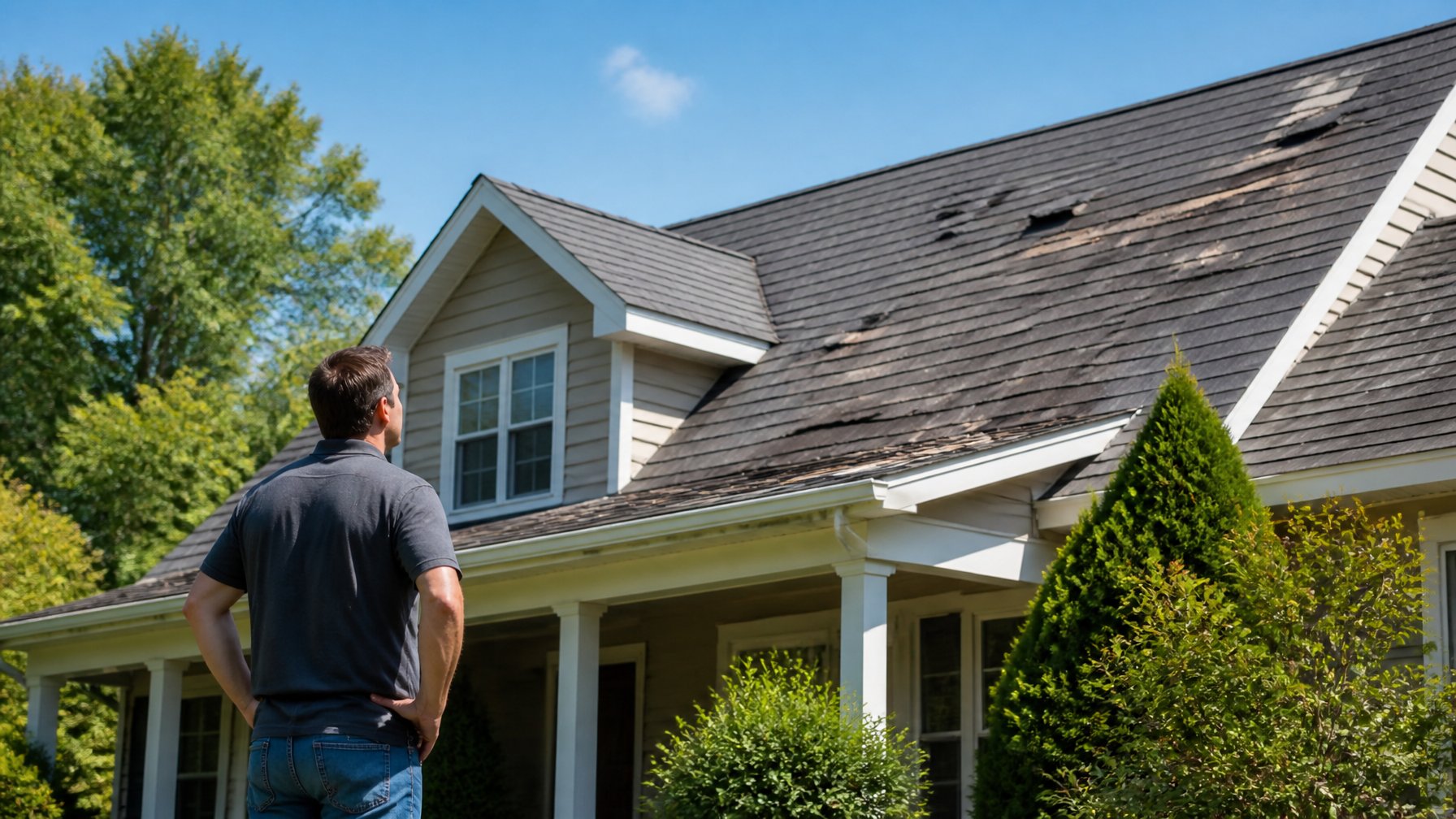
Knowing which visible clues mean urgent action helps you save money and avoid bigger damage. The tips focus on simple checks you can do from the driveway or yard, what to compare when weighing repair versus replacement, and questions to ask a pro if you call one.
1) Curling or cupped shingles visible along eaves
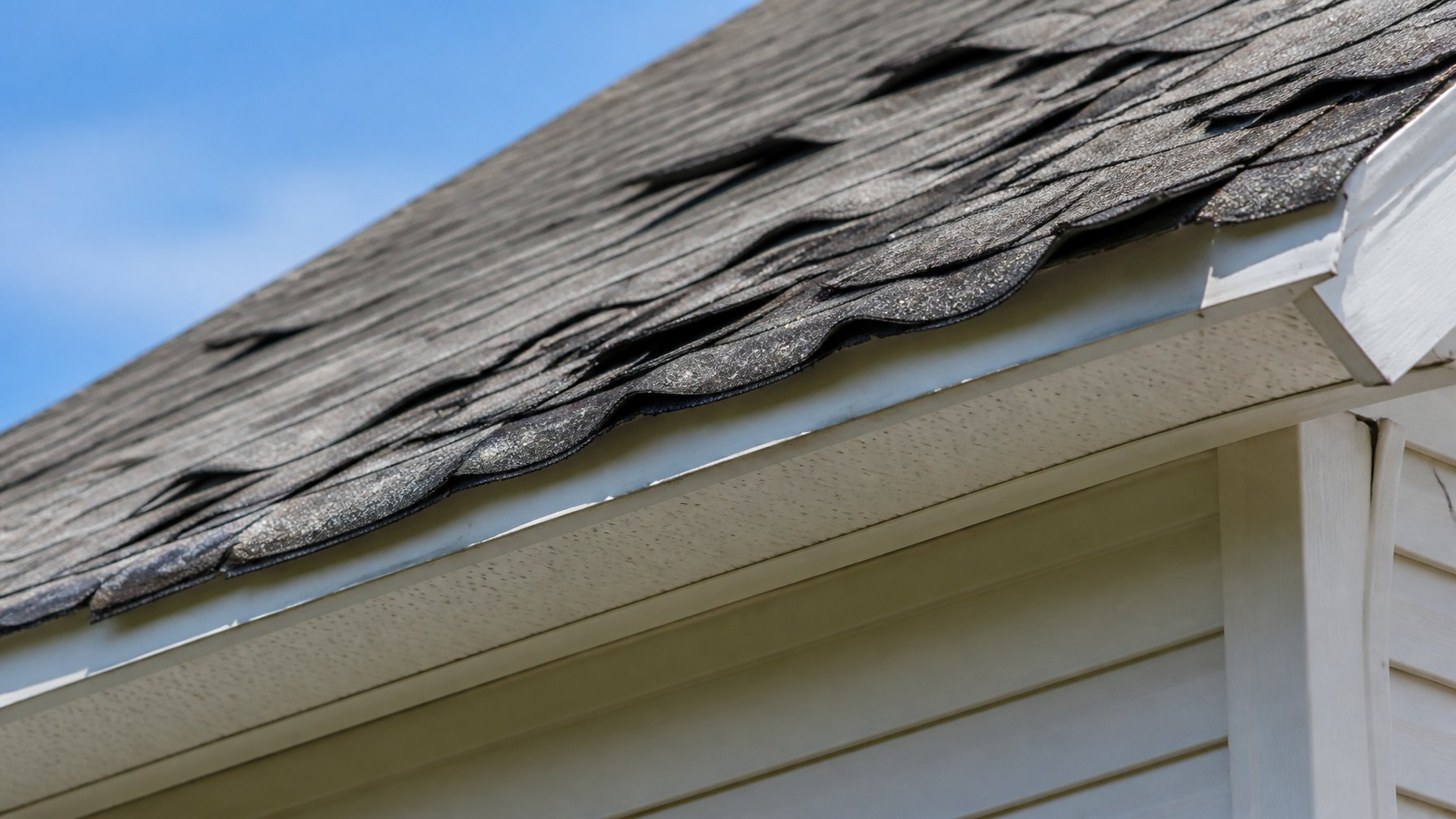
They should look flat along the roof edge. If shingles curl up at the edges or form cups, compare several spots along the eave to see if it’s isolated or widespread. Widespread curling suggests age, heat damage, or poor ventilation.
Ask whether the attic has enough ventilation and insulation, since trapped heat and moisture can warp shingles. Check for brittle, cracked shingles nearby; brittle shingles often curl next. Weigh repair vs. replacement: small areas can be patched, but large-scale curling usually means a roof replacement.
Homeowners can take photos from the ground with a zoom lens to track progression over months. For guidance on next steps and local pros, visit the homepage.
2) Missing shingles or exposed nail heads
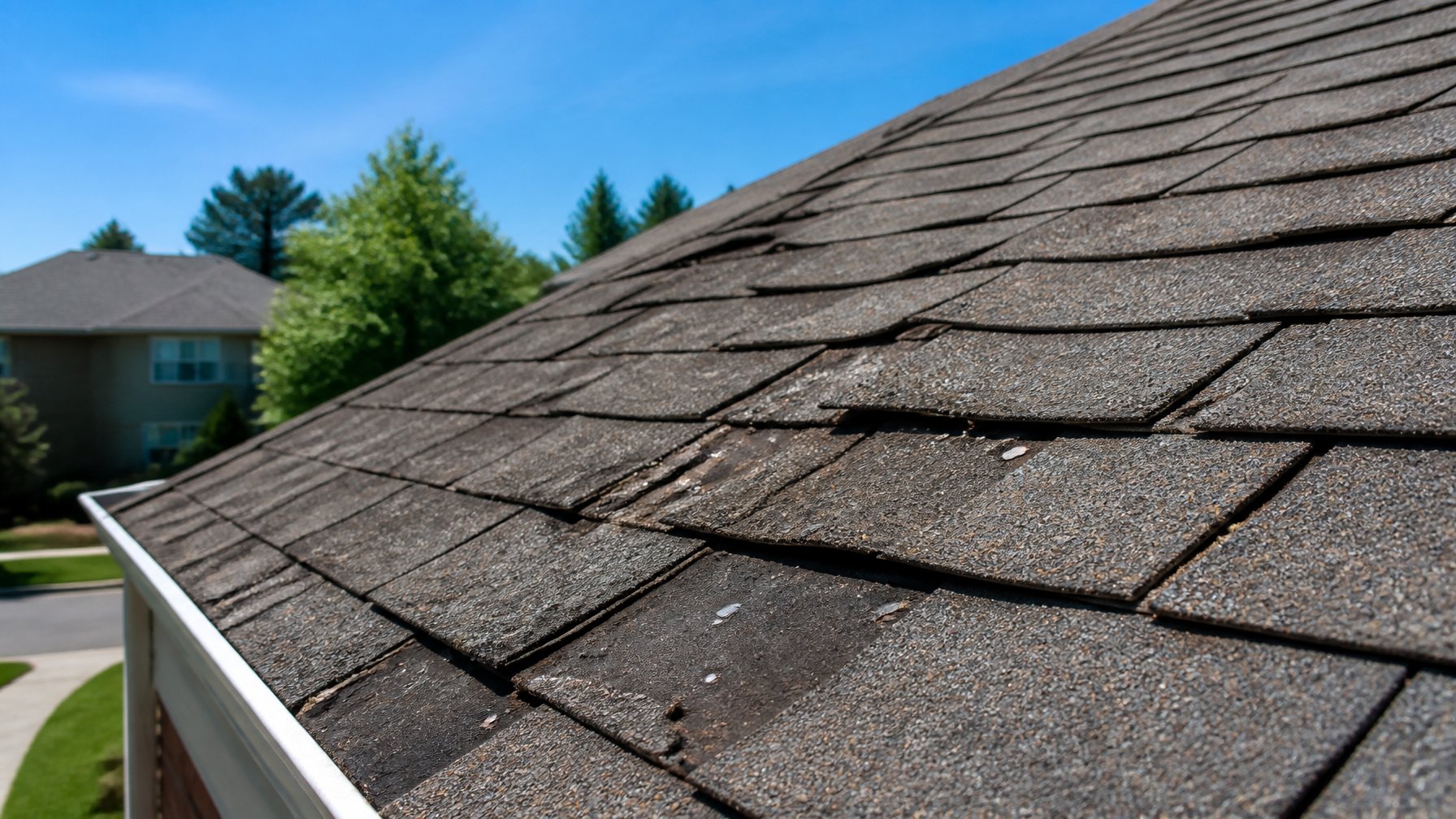
They should scan the roof from the driveway and look for gaps where shingles used to be. Missing shingles let water into the underlayment, so compare the exposed areas to intact sections to judge how widespread the problem is.
Exposed nail heads rust and lift shingles. Ask whether flashing or underlayment near those nails looks damaged, and note if nails are clustered in one area or scattered across the roof.
Homeowners should weigh quick patching against replacing larger sections. If many shingles or nails appear in multiple spots, getting a professional inspection can clarify costs and options. See the roofing service page for guidance on next steps.
3) Granule loss accumulating in gutters
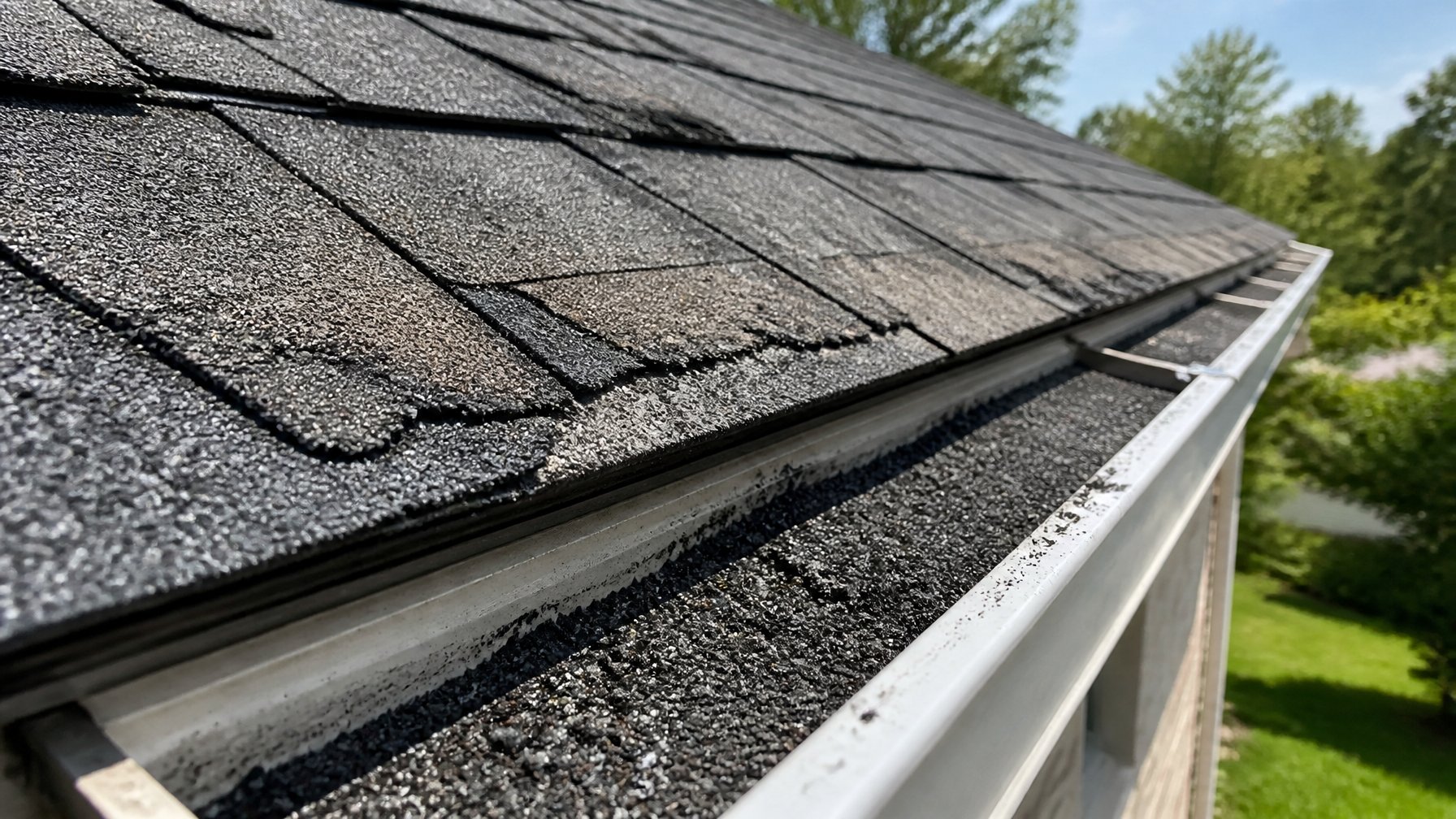
They should check gutters for a sand-like layer of granules after a rain. Compare granule color and amount to the shingle surface; heavy buildup often means shingles are losing their protective coating.
Homeowners should ask whether the granule loss is worse near roof edges or downspouts. That pattern can point to normal wear versus accelerated breakdown from heat, algae, or older shingles.
Weigh the tradeoff between cleaning gutters often and replacing shingles. Frequent cleaning masks the problem, while letting granules collect can hide underlying shingle wear; contact the roofing service page to learn options and next steps.
4) Sagging roofline or uneven ridge silhouette
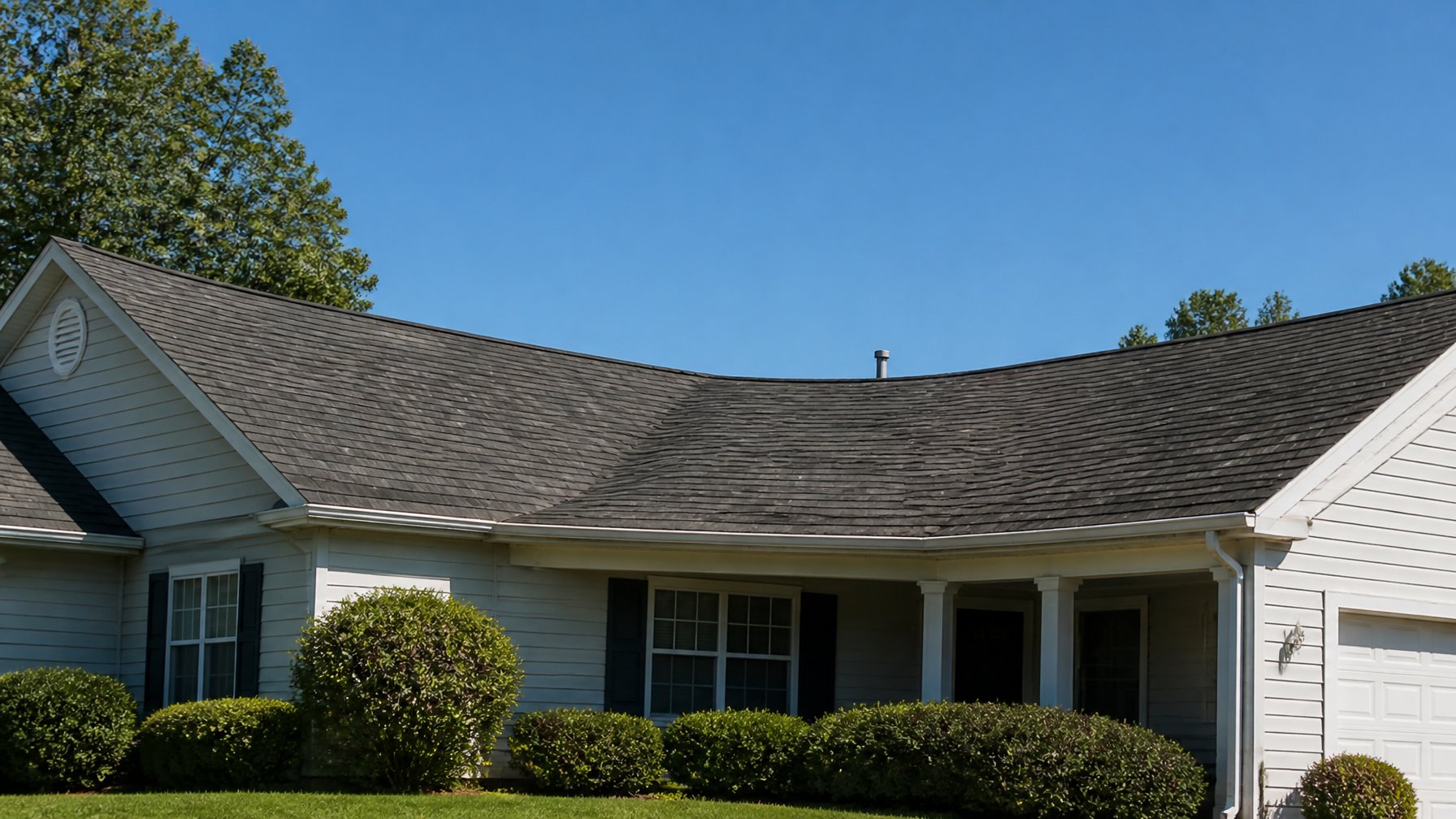
A sagging roofline or a wavy ridge often means the roof deck or rafters may be failing. They should compare the low spots to a straight edge from the ground and note whether the sag follows a roof valley, chimney, or an older section of the house.
Ask whether the attic framing or plywood decking was replaced recently and how much sag was corrected. The tradeoff is often between repairing framing versus a full re-roof; a partial fix can be cheaper now but may cost more later.
They can look for interior clues like cracked drywall, sticking doors, or uneven ceiling lines that match the sag outside. For help deciding next steps, see roofing services.
5) Dark streaks indicating algae where shingles are worn
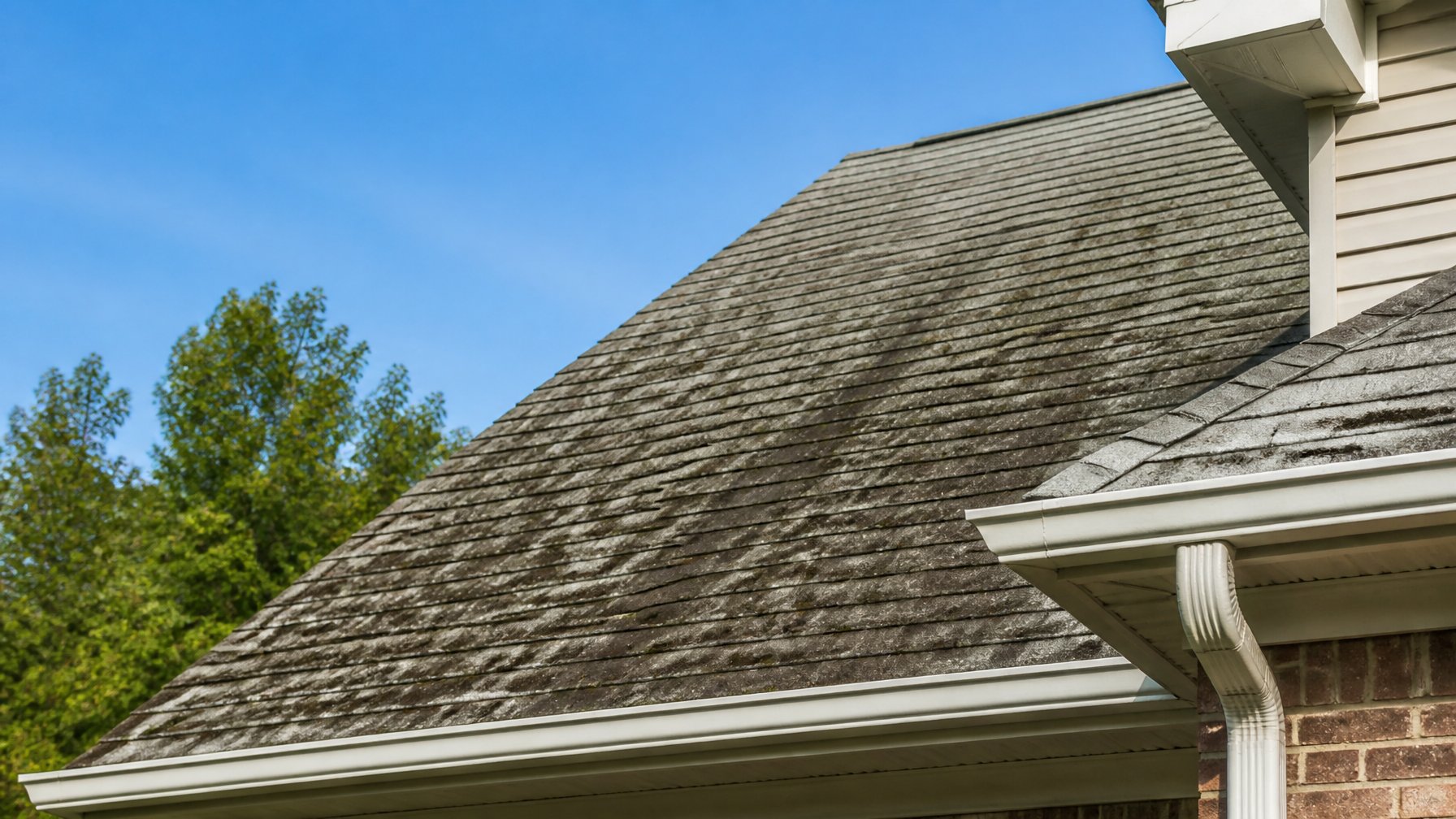
Dark streaks running down a roof often mean algae growth where shingles lost granules. Homeowners should compare streaks on shaded versus sunny sections; algae favors damp, shaded spots. Ask a roofer whether the shingles have a copper or zinc strip to slow algae, and weigh the cost of treatment vs. replacement.
Check nearby trees and gutters for debris that traps moisture and helps algae spread. They should consider cleaning with a gentle, approved solution and rinsing well, then trimming branches to improve sun and airflow.
If shingles look thin or bare where streaks start, replacement may be better than repeated cleaning. Review roofing material options and warranties on the company homepage before deciding.
6) Cracked or split shingles near chimney or vents
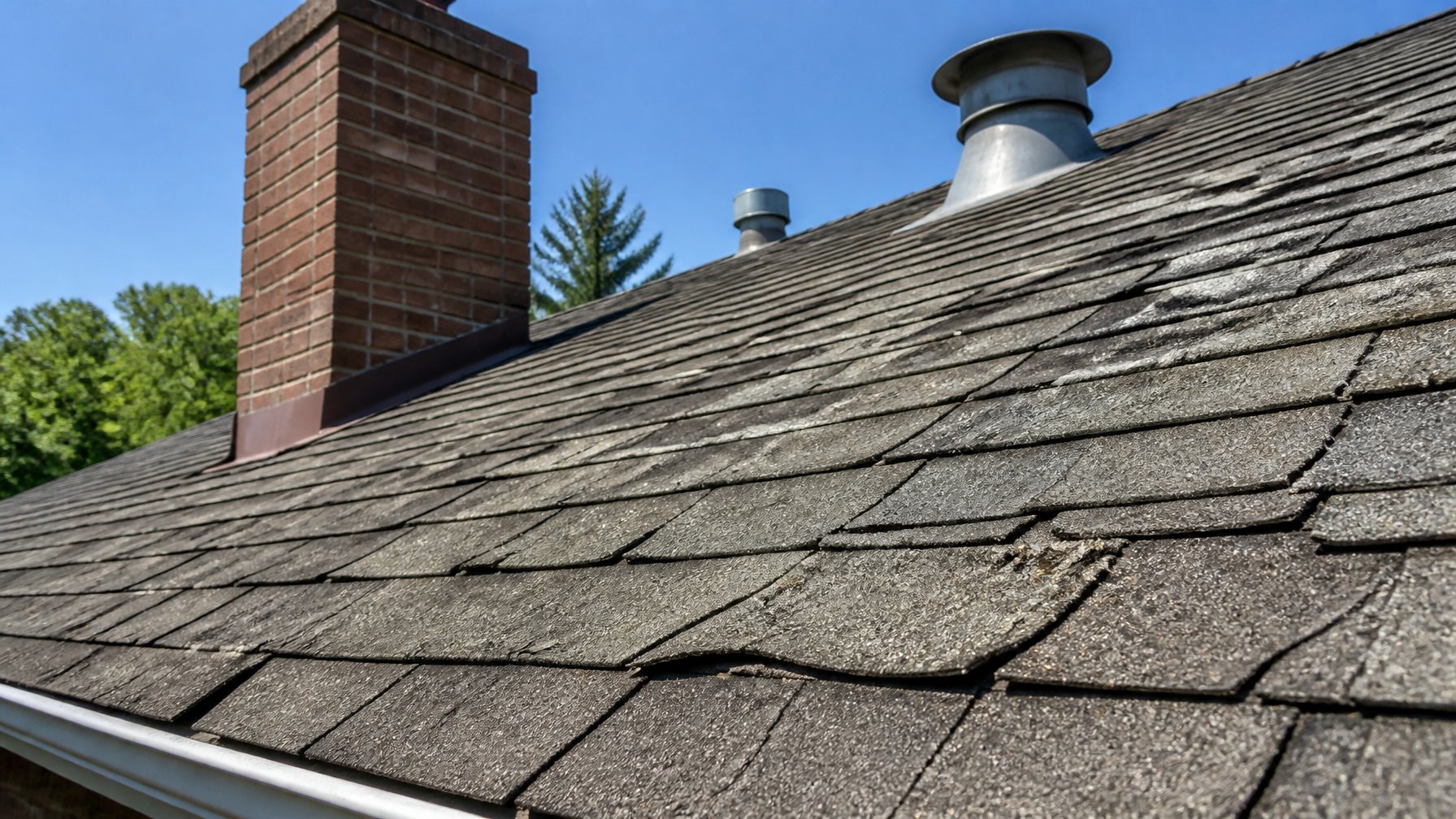
They should scan the roofline around chimneys, plumbing stacks, and roof vents for cracked or split shingles. Compare the damaged shingles to nearby intact ones to judge how widespread the problem is and whether flashing might be pulling or failing.
Ask whether flashing has gaps or rust and if sealant around vents needs replacement. A tradeoff exists: repairing a few shingles is cheaper now, but replacing flashing and surrounding shingles costs more but reduces leak risk long-term.
If many shingles show similar splitting, it may mean poor installation or age. For more guidance on roof repair options and local contractors, see Roof Repair.
7) Flashing separation or gaps around roof penetrations
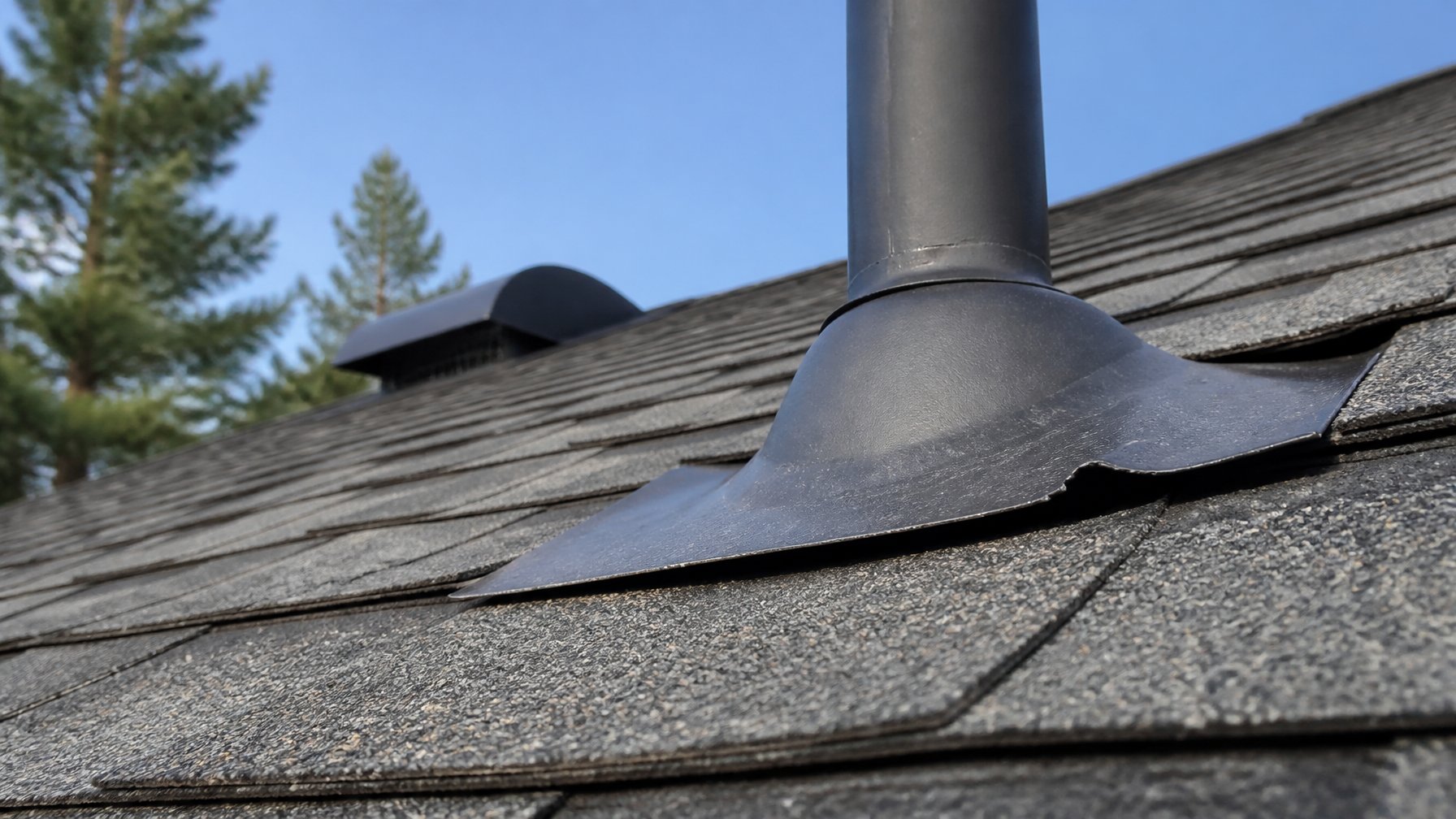
They should look tight where vents, chimneys, and pipes meet the roof. Compare the flashing edges to nearby shingles; gaps, lifted metal, or exposed nails mean water can get in.
Ask whether flashing is metal or rubber and how long it has been in place. Metal can corrode, and rubber can crack; each has different repair tradeoffs and costs to replace.
Check for sealant that is brittle or missing at corners and seams. A small gap now can lead to stains inside or rot later, so weigh quick resealing versus full flashing replacement.
For guidance on repairs and trusted local pros, see the roofing services page.
8) Light shining through attic vents from ground inspection with binoculars
They should scan roof vents with binoculars from the ground to see light inside vents at dusk. Bright light shows gaps or broken vents where wind or pests can enter. Compare vent areas to nearby sections that look dark; large bright spots mean bigger openings to check.
They should ask whether vent screens are intact and whether flashing around vents is sealed. A small repair may be cheaper than replacing vents; a large gap often means a roofer or vent specialist is needed. For more guidance, visit the homepage for roof inspection tips.